They approved it.
Now hold them accountable.
A proposed 40,000-acre AI data center was approved in rural Utah by a board riddled with undisclosed conflicts of interest. The House Speaker owns 25,000 acres nearby. The senator who wrote the enabling law owns land 4 miles from the site. The governor's family owns the fiber routes. These are the documents you need to fight back — and the instructions to use them.
What this project actually does to Utah
Calculated by Dr. Robert Davies, Physics Professor, Utah State University — reported by the Salt Lake Tribune, May 7, 2026. His conclusion: "I suspected it would not be good. What I've found is it's so much worse than I even thought."
What Utah's Own State Data Says About Hansel Valley
The State of Utah and the U.S. Geological Survey conducted a comprehensive hydrological study of Hansel Valley in 1966–67 and published their findings in 1971. This is not an activist report. It is the official government scientific record. What it found makes MIDA's approval of Stratos indefensible.
Technical Publication No. 33 — Utah Department of Natural Resources
"Hydrologic Reconnaissance of Hansel Valley and Northern Rozel Flat, Box Elder County, Utah" — J.W. Hood, U.S. Geological Survey, 1971. Prepared in cooperation with the Utah Division of Water Rights, based on the Utah State Engineer's hydrographic survey of 1966–67.
↓ Download Official PDF"The estimated perennial yield of ground water in Hansel Valley is negligible." The valley simply does not have usable water. A 9-gigawatt data center needs enormous amounts of it.
Utah State Engineer Hydrographic Survey, 1966–67 · Hood, 1971 p. 18Dissolved solids concentration ranges from 400 to 94,000 mg/L. "In the rest of the area, the ground water ranges from slightly saline to briny. All the water is very hard. Little of the water is suitable for public supply." Not a word of this was mentioned at the MIDA approval meeting.
Hood, 1971 p. 18–19 · Table 5 & Table 9"All the water has a high-salinity hazard for irrigation, and about half the area yields ground water suitable for stock." The land was used for grazing and dry-wheat farming precisely because it cannot support intensive water use — the exact opposite of what a hyperscale data center requires.
Hood, 1971 p. 20 · Figure 4"Hansel Valley is a structural depression... a composite graben in which the older rocks beneath the valley dropped down along major faults." A fault-bounded trough shaped by seismic activity that traps air, heat, and pollutants. The geology itself is the problem.
Hood, 1971 p. 5 · Plate 1"The valley is in the Great Salt Lake drainage basin and is directly tributary to the lake." Every drop of water that enters Hansel Valley — and every industrial pollutant — flows directly to the Great Salt Lake.
Hood, 1971 p. 4 · Abstract p. 1USU geological research confirms Hansel Valley is "seismically very active" with evidence of multiple fault systems bounding the valley. Building 9GW of industrial infrastructure on this geology was never discussed publicly.
Hood, 1971 p. 4–5 · USU geological research, 2026"The permanent population of the valley is small, consisting of perhaps two or three families. During the planting and harvest seasons, farm operators commute from nearby towns." This is the land MIDA voted to industrialize on a 40,000-acre scale.
Hood, 1971 p. 2The Hansel Valley drainage basin covers 152,000 acres — 237 square miles. The Stratos Project covers 40,000 of those acres. The valley is a closed hydrological system. What goes into it stays in it — until it drains directly into the Great Salt Lake.
Hood, 1971 p. 1 · Abstract; Table 2"Future development in much of Hansel Valley... probably will be similar to past development — drilling of wells that supply saline water suitable for stock." The Utah State Engineer concluded in 1971 the valley could only support livestock wells. MIDA approved 9 gigawatts of data center infrastructure in 2026.
Hood, 1971 p. 22"It appears that [Carpenter, 1913] was correct in his assessment that development of the area was and will be hindered by a deep water table in the uplands and salty water in the lowlands."
What happened — and why it matters
On April 24, 2026, MIDA unanimously approved the Stratos Project. On May 4, the county commission followed. Both approvals were pushed through despite serious, documented conflicts of interest. Utah law provides formal processes for citizens to hold these officials accountable. This site gives you everything you need to use them.
Who we're filing against — and why
Every filing targets a documented conflict of interest supported by public records. Verify the facts yourself before signing — see the "actual knowledge" guide in the How to File section.
Chaired the MIDA approval on April 24, then received $135,000 from MIDA-connected donors exactly 7 days later — the five largest donations in his PAC's six-year history, all on one day. He also appoints half the Senate Ethics Committee that would normally investigate him.
Publicly called Stratos a "national security imperative" and pressured MIDA to approve it — while his family has owned CentraCom (the dominant rural fiber provider in the project area) since 1919. Three federal data sources confirm the site is a fiber desert.
Three compounding conflicts — the deepest in the package:
He wrote the law. In 2022, Stevenson personally sponsored SB 232 (Chapter 463, 2022) — the bill that rewrote Utah Code § 63H-1-401, eliminated the contiguity requirement for private land in MIDA project areas, and made county consent irrevocable. The Stratos Project — 40,000 non-contiguous private acres — could not have been legally approved without his bill. Senate vote: 27-0. House vote: 70-0.
He voted to use it. Four years later he sat on the MIDA board and voted unanimously to approve the first project to activate the legal framework he created — without disclosing any conflict and without recusing himself.
He owns the nursery. J&J Nursery — Utah's largest nursery, 100+ acres, 200+ employees — is a major agricultural water user directly affected by Stratos's water rights implications. Never disclosed before the vote.
Then knocked an ABC4 reporter's phone out of his hand at J&J Nursery on camera when asked about it. Police report filed. Active investigation confirmed. When the Tribune asked for comment: "No thanks."
Also Senate sponsor of companion HB 82 (2022) — MIDA bond oversight bill co-sponsored by Mike Schultz, who later acquired 25,000+ acres surrounding Stratos.
Appointed by Governor Cox. Sat on MIDA board during approval. His office administered $839,708 in broadband grants to CentraCom — the Governor's family company. Three overlapping conflicts, zero disclosures.
A professional lobbyist who gets paid to influence government bodies — simultaneously holding a voting seat on MIDA. His firm manages what it calls the largest PAC in Utah.
Simultaneously MIDA's most senior staff officer and its in-house lawyer. Publicly promoted the project while citing "redundant fiber availability" — a claim contradicted by three federal data sources.
Owns Century 21 Gage Froerer & Associates — a real estate brokerage operating in northern Utah since 1977. Voted to approve a 40,000-acre land use transformation directly affecting his market. Disclosed nothing.
The Land Conflict: Speaker Schultz & Senator Sandall
The House Speaker owns 25,000+ acres surrounding Stratos — all disclosed as "Holding Company." The senator who wrote the electricity enabling law owns land 4 miles from the site and said he'd sell "for the right price." Neither disclosed anything.
Three LLCs — Mike Schultz Inc., Sawmill Ranch LLC, Keller Cattle Corp. — hold 25,000+ acres surrounding Stratos. The January 3, 2025 deed was filed 13 months before the public knew the project existed. Recorded consideration: $10. Disclosure: "Holding Company." Kevin O'Leary says he met with Schultz about the project in late 2025. Schultz denies it.
Sponsored SB132 — the 2025 Electric Utility Amendments bill that created the legal framework for 100+ MW closed private generation systems. Passed 71-0 House, 27-0 Senate. Sandall owns land ~4 miles from Stratos. Told ABC4: "I would not be opposed to [selling], for the right price." Zero disclosure when SB132 passed.


The Water Fight — And How They Changed the Rules Mid-Game
Nearly 4,000 Utahns paid $15 each to formally protest the Stratos Project's water application. Then the developer withdrew it — wiping out every single protest. Before they refile, Utah's legislature quietly passed HB60, stripping the state engineer's power to consider public welfare. The people who voted yes on that bill are the same people approving this project.
The NumbersWhat Stratos Actually Needs
They Changed the Rules While You Were Watching
Sponsored by Rep. David Shallenberger (R-Orem). Passed the House 54–17 on February 3, 2026. Passed the Senate 18–7 on February 20, 2026. Signed into law and took effect before the Stratos water application was withdrawn and refiled. Utah water rights law was previously among the most protective of public welfare in the Western United States. Not anymore.
The "Negligible" Loophole
If a harm is deemed negligible in isolation, the engineer can ignore it. But the Great Salt Lake is dying from death by a thousand cuts — no single diversion seems decisive, but together they drain the lake. HB60 makes that cumulative harm legally invisible.
The Standing Barrier
You now need a direct, personal, particularized injury to challenge a water decision in court. If you don't own water rights being directly impaired, you may have no legal standing — even if the project threatens your air, your health, and your lake.
The Reset Trap
The developer withdrew the first application — wiping out 3,900 protests — and will refile under the new, weaker standard. Utahns spent $58,500 in filing fees that are now gone. When they refile, the clock starts over under HB60's rules.
Utah Senate — HB60 Final Vote
February 20, 2026 · 11:21 AM
Sandall, S. — Absent. The senator who sponsored SB132 (the Stratos enabling law) and owns land 4 miles from the project did not vote.
Utah House — HB60 Final Vote
February 3, 2026 · 2:40 PM
The Pattern — Same People, Every Decision
When the New Application Drops — File Again, File Smart
The developer will refile. When they do, you have a narrow window to protest. Under HB60, how you frame your protest determines whether the state engineer can legally act on it. General concerns about the Great Salt Lake still matter — but the most powerful protests are tied to specific water rights.
Watch for the New Application
Monitor the Utah Division of Water Rights for new filings by Bar H. Ranch, Inc.
or any entity associated with the Stratos / Wonder Valley project.
Check: waterrights.utah.gov →
Search applications → Box Elder County.
Environmental groups including Friends of Great Salt Lake, Center for Biological Diversity,
and Grow the Flow Utah are monitoring and will send alerts when the new application appears.
Sign up for their notifications now so you don't miss the protest window.
Step-by-Step: How to File a Water Rights Protest
Find the water right number
When the new application is filed, the Division of Water Rights will publish it publicly. You need the specific Water Right or Change Application number — it will look like a string of digits (e.g. 57-9999). Environmental groups will post this number when the application drops. Without it you cannot file.
→ waterrights.utah.govGo to the protest portal
Navigate to the official protest form at the link below. Enter the water right number and click "Get Info" to confirm you have the right application before proceeding.
→ File a Protest — Utah Division of Water RightsWrite your protest reason — this is critical under HB60
Under the new law, the state engineer can only act on protests tied to beneficial use, water quantity, quality, or availability — or direct impairment of an existing water right. The most powerful protests come from:
If you own water rights: State specifically how this change application will impair your right — reduced flow, changed timing, lowered water table, or direct competition with your water source.
If you don't own water rights: Focus on water quantity and availability impacts — draw on the 1971 state hydrological data showing Hansel Valley has negligible groundwater yield, and the fact that the valley drains directly to the Great Salt Lake.
Request a hearing
The protest form asks: "Are you requesting a hearing?" Answer YES. Hearings force the state engineer to hold a formal proceeding where evidence is presented and the public record is built. This is your strongest leverage point.
Pay the $15 fee and save your receipt
The fee is $15 per protest. It is non-refundable — even if the application is withdrawn again. Your protest letter and payment receipt are your proof of filing. Save both. The Division of Water Rights will send you updates as a registered protestant.
Connect with farmers and water rights holders
Under HB60, the most legally powerful protests come from people with existing water rights who can show direct impairment. If you know farmers, ranchers, or other water rights holders in Box Elder County or the Salt Wells watershed, connect them with the protest process.
"Start making friends with farmers out there," advised Kyle Roerink of the Great Basin Water Network. "Without connections to private property that could be impacted by an industrial development such as a major data center, public protest doesn't carry the weight that it once did."
Friends of Great Salt Lake
Filed the first formal legal protest against the Stratos water application. Will alert members when the new application is filed.
fogsl.org
Grow the Flow Utah
Led by BYU ecologist Ben Abbott. Published detailed protest instructions and tracked HB60 throughout the session.
growtheflowutah.org
Center for Biological Diversity
Filed formal protests and is pursuing legal challenges to the water rights process and the project's environmental review.
biologicaldiversity.org
Primary sources: Utah Division of Water Rights (waterrights.utah.gov) · Utah DNR Technical Publication No. 33, 1971 (waterrights.utah.gov/docSys/v920/w920/w920008v.pdf) · HB60, 2026 Utah General Session (le.utah.gov/~2026/bills/static/HB0060.html) · Utah News Dispatch · KUER · Fox 13 · ABC4 · Axios Salt Lake City · Grow the Flow Utah · Friends of Great Salt Lake · Great Basin Water Network
Citizens Are Already Losing Power, Water & Home Values.
Utah Is Next in Line.
This week, 49,000 Lake Tahoe residents were told they lose 75% of their power to data centers. In Texas, communities watch water disappear with no recourse. In Loudoun County, Virginia — the world's largest data center hub — residents can't sleep, can't go outside, and neighborhoods are being swallowed by windowless server farms. Stratos would be larger than all of it combined.
49,000 Residents Losing Power to Data Centers
NV Energy redirects decades of supply. Less than one year's notice.
NV Energy — supplying Tahoe for decades — told Liberty Utilities it would stop providing power after May 2027. The reason: data center capacity at the Tahoe-Reno Industrial Center. 49,000 California residents have no direct grid connection and no leverage against data center buyers with far more purchasing power.
Communities Fighting for Water the State Isn't Tracking
464 data centers. No public water disclosure required. No plan.
Hood County tried moratoriums twice. College Station rejected a land sale. San Marcos stopped one project. The State Water Plan doesn't include data center demand at all — it predates the boom. Texas requires no public water disclosure from data centers. Communities are fighting after the fact.
The World's Biggest Hub. Residents Can't Sleep. Homes Are Being Outbid.
200 data centers. Natural gas turbines next to neighborhoods. Utah's future if Stratos builds.
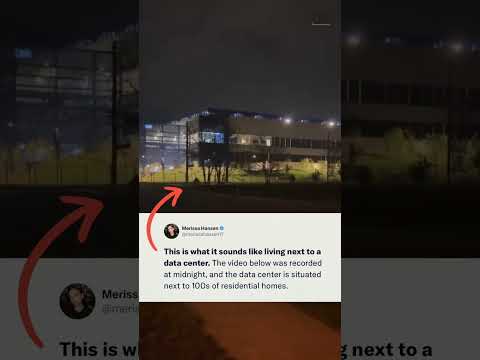
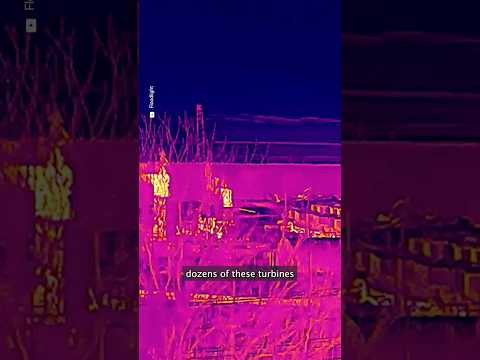
Residents describe the noise as "a helicopter hovering 24/7," a "loud drone," a freight train, a leaf blower — and it never stops. One facility — Vantage Data Centers in Sterling — runs eight natural gas turbines around the clock, generating its own power off-grid. Residents next door take sleeping pills, can no longer use their porches, and are considering legal action.
Loudoun County, Virginia — The Full Story Utah Needs to See
The world's largest data center hub is a preview of Stratos — specifically because the Vantage VA2 facility (18 acres, 800,000 sq ft, 96 MW) is already running natural gas turbines 24/7 off-grid next to homes. Stratos proposes 9,000 MW. That's 93 times Vantage's entire power capacity — in a desert valley with no viable groundwater.
🔊 The Noise That Never Stops
Data centers operate 24 hours a day, 7 days a week. The noise comes from industrial cooling fans and gas turbines that cannot be turned off. Residents report hearing it inside their homes with windows closed, at 3 AM, in every season. The Vantage facility runs eight natural gas turbines continuously — originally permitted for backup use only. County officials say there are "no zoning rules to cover this." The noise ordinance caps industrial sound at 55 decibels at property lines, but doesn't account for the "tonal narrow band hums" and low-frequency vibration that penetrate walls and floors.
🏘️ The Housing Crisis Nobody Warned Residents About
Data center developers are outbidding residential builders for land across Loudoun County. County Chair Phyllis Randall says this is now residents' number one complaint: "I used to say 'data centers do this for your tax rate.' And people said 'oh, OK.' Now I say that and they say: 'I don't care. I will pay more taxes. Stop building them.'" Land intended for affordable housing is being converted to server campuses. Middle- and lower-income residents are being pushed out of the market entirely.
💨 Natural Gas Turbines = Air Pollution Crisis
The Vantage VA2 facility — the first in Virginia to use off-grid gas turbines as its primary power source — has a permit for 51 diesel generators for backup on top of the eight turbines. The Piedmont Environmental Council commissioned an independent study finding measurable PM2.5 particulate matter impacts on surrounding neighborhoods. Another developer has proposed 23 gas turbines at a nearby site. Virginia's DEQ minor air permit process requires no public input and doesn't consider cumulative impacts from neighboring facilities.
⚡ The Grid Couldn't Keep Up — So They Went Off It
Dominion Energy told Vantage it would be three years before the VA2 campus could connect to the grid. So Vantage fired up eight natural gas turbines and went off-grid permanently — right next to a residential neighborhood. The VA2 campus: 18 acres. 800,000 square feet. 96 megawatts of critical power. County officials say they didn't know Vantage was "running in island mode" until the turbines were already operating. The Stratos Project proposes 9,000 megawatts — that is 93 times the entire power capacity of VA2 — using the same off-grid gas generation model. Utah's SB132, sponsored by Senator Sandall, created the legal framework for exactly this structure at 100+ MW scale. If 18 acres and 96 MW at Vantage is causing this level of community harm, what does 40,000 acres at 9,000 MW do to Hansel Valley?
Loudoun had decades to adapt. Tahoe had years. Box Elder had two weeks.
Loudoun County built its data center industry over 20+ years and is still struggling to protect residents from noise, air pollution, and housing displacement. Tahoe lost power it had relied on for decades with less than a year's notice. Box Elder County residents had two weeks between learning about Stratos and commissioners voting to approve it. Stratos would be larger than anything any of these communities faced. And unlike Loudoun, Hansel Valley has no viable groundwater, sits at the north end of a collapsing watershed, and the valley's geology creates a natural bowl that traps heat, noise, and air pollution.
Power Gets Redirected
Utilities redirect electricity from residential customers to industrial data center buyers with far more purchasing power. Tahoe is the starkest example — but Dominion Energy in Virginia raised residential rates specifically to fund data center infrastructure.
Water Gets Consumed Quietly
Texas has 464 data centers and no required public water disclosure. The state water plan predates the boom. Utah's Hansel Valley has negligible groundwater per the state's own 1971 study — yet Stratos was approved without a public water plan.
Noise Invades Homes 24/7
The Vantage VA2 campus — 18 acres, 96 MW — has residents half a mile away taking sleeping pills and spending $8,000 on soundproofing. Stratos is 40,000 acres and 9,000 MW. Hansel Valley is a natural sound bowl enclosed by mountains. The physics of low-frequency industrial noise in a closed geological basin have never been publicly studied or disclosed.
Communities Find Out Last
Tahoe residents: less than a year's notice. Box Elder: two weeks. Loudoun: approvals were granted before residents understood the full operational impact. The pattern is the same everywhere — private negotiations, public surprise, inadequate recourse.
Taxpayers Subsidize the Build
Texas: $1B+ in developer tax breaks. Utah: Meta/Facebook's Eagle Mountain deal is worth up to $750M in taxpayer subsidies. Stratos comes with its own MIDA tax concession framework. The developers get the upside. Residents get the noise, the air pollution, and the bill.
Locals Who Fight Back Win Sometimes
College Station TX rejected a data center. San Marcos stopped one. Hood County tried moratoriums. Provo City unanimously rejected a data center rezoning in February 2026. Loudoun residents are forcing new noise ordinances. Utah found out early enough to matter — if people act now.
How the National Pattern Arrived in Utah — Timeline
'It's like we don't exist' — Fortune
Original Fortune investigation. NV Energy redirecting Lake Tahoe's power to data centers. 49,000 residents. May 12, 2026.
fortune.com →Thirsty Data — HARC Research
Houston Advanced Research Center white paper. 464 centers, no state water tracking, 29–161B gallons projected by 2030.
harcresearch.org →Sterling Residents Raise Alarms — Loudoun Now
Vantage data center running 8 natural gas turbines off-grid next to Trailside HOA. Residents can't sleep. April 2026.
loudounnow.com →90 Decibels Outside CloudHQ — NBC4 Washington
NBC4 measured 90 decibels outside Ashburn data center — ear protection level. Residents miles away reporting disruption.
nbcwashington.com →Gas Turbine Health Study — Piedmont Environmental Council
Independent EmPower Analytics study finding PM2.5 air quality impacts on neighborhoods near the Vantage VA2 gas turbine facility. May 2026.
pecva.org →Property Values & Power — Data Center Frontier
Deep analysis of Loudoun County's residential real estate vs. data center land pressure. Developers outbidding homebuilders. County Chair: residents say "stop building them."
datacenterfrontier.com →Texas Water Strain — Bloomberg Government
How Texas communities — College Station, Hood County, San Marcos — are fighting back. City leaders: "The resources this data center would draw — we don't like that."
bloomberg.com →High-Pitched Whines & Home Values — Saving Advice
Analysis of how constant data center noise is affecting property desirability near facilities. Residents changing sleeping arrangements just to rest. March 2026.
savingadvice.com →Data Centers Cutting Power to Homes — Electrek
National analysis: data center demand is reshaping the grid, driving up rates, displacing residential customers. US electricity rate up 9.5% year-over-year in January 2026.
electrek.co →Loudoun had 20 years and still can't protect its residents. Utah has right now.
Loudoun County residents didn't realize what was happening until they couldn't sleep. Tahoe residents didn't know until the power was already promised to data centers. Utah found out early enough to fight back — but the window is open, not infinite. The ethics complaints, the water protests, the GRAMA requests, the referendum signatures — each one builds the legal and political record that makes Stratos harder to finish.
Stratos is not alone —
Utah is being sold off
The Stratos Project is the most extreme example — but Utah's politicians have been handing Big Tech sweetheart deals for years. The pattern is always the same: secret negotiations, quasi-governmental approval bodies, massive tax breaks, and citizens finding out after it's done.
Before it was called Meta, Facebook quietly negotiated a data center deal in Eagle Mountain, Utah — and the public didn't find out what they gave away until it was done. The tax break package, approved for up to five phases over 40 years, is worth up to $750 million in taxpayer subsidies. This is the playbook O'Leary and MIDA copied for Stratos — only bigger.
The Utah Legislature created sales tax exemptions specifically for data centers to sweeten the deal further. These exemptions were written into state law — your elected representatives changed Utah tax code to benefit Facebook. The same legislature that controls MIDA's enabling statute.
Utah currently has 48 operational data centers drawing 920 megawatts — with an additional 2,600 megawatts now under construction set to more than triple the state's capacity. These are happening across the state, often with little public notice.
Other Proposed and Active Data Centers Across UtahMeta's existing campus expanding to 12 gigawatts by 2032 using nuclear power. Joule Power's 650MW campus also planned nearby. Combined footprint transforming the area.
Multiple large-scale data centers proposed in drought-stricken Millard County. Water usage raising alarm among local residents and scientists.
Rural eastern Utah being targeted for data center development. Same pattern — remote agricultural land, quasi-governmental approvals, minimal public input.
The NSA Utah Data Center in Bluffdale — 1 million square feet of government surveillance infrastructure — sits among multiple commercial data centers already operating along the Wasatch Front.
Provo City Council unanimously rejected a rezoning request for a 9-acre AI data center in February 2026. One of the rare cases where local officials actually said no.
40,000 acres. 9 gigawatts. 23 atom bombs of heat per day. Approved anyway. This is what happens when citizens don't fight back.
They promised jobs.
Here's what they actually deliver.
Politicians and developers describe data centers as economic engines. The actual numbers tell a very different story. Data centers are among the least labor-intensive structures in the American economy — and their tax subsidies are quietly draining the budgets they claim to fill.
The Jobs RealityWhat developers promise
Thousands of jobs during construction. Long-term economic transformation. Tax revenue that will fund schools and fix budget shortfalls. A regional economic anchor for decades.
Construction jobs are real — a 100MW build employs 800–1,200 tradespeople at peak. They last 18 to 36 months. Then they're done.
What the numbers show
A $136 million Ark Data Centers campus expansion in Ohio created exactly 10 permanent jobs. Amazon pledged to create 1,000 jobs across Virginia with a $35 billion, 17-year investment — one job per $35 million spent.
The most automated hyperscale campuses run on skeleton crews. A 9GW facility doesn't need a city. It needs a small building operations team and a security guard at the gate.
| Industry | Permanent Jobs per $100M Invested | Notes |
|---|---|---|
| Hyperscale Data Center | ~8 jobs | Based on Virginia VEDP data; $13M per permanent job (Food & Water Watch, Jan 2026) |
| Manufacturing (non-data center) | ~730 jobs | ~$137,000 per job — approx. 100× more labor-efficient than data centers |
| Onshore Wind + Storage | Higher than data centers | 25–30 year project life with steady regional maintenance employment (Latitude Media, 2026) |
| Retail / Hospitality | Far higher | Labor-intensive by nature; stays embedded in local economy |
"A lot of households — and the people that are elected by households — and local governments are becoming more unnerved by the public pushback to data centers."
The Budget Reality
Officials say data centers will fix budget shortfalls. In state after state, the opposite is happening. Tax exemptions written specifically for the industry are ballooning into billion-dollar drains — on the same school districts and county budgets they claimed to rescue.
Good Jobs First identifies Utah as one of 12 "dark states" — states with substantial data center investments that fail to disclose even aggregate revenue losses from data center tax exemptions. Utah citizens currently have no way to know how much the state's data center tax breaks are actually costing them. The Stratos deal is the largest in state history — and the public still doesn't have the full accounting.
The school funding trap
In most states, a significant share of sales tax revenue is earmarked for K–12 education. When legislatures create blanket data center sales tax exemptions, schools are the first to lose.
Virginia's schools lost an estimated $267 million in a single year. Oregon's public school system lost $275 million in FY2024. Alpine School District in Utah is already absorbing 70% foregone taxes from Meta's Eagle Mountain deal.
States are starting to say no
Ohio, Georgia, and Michigan legislatures all voted to sunset or repeal data center tax exemptions in 2025–26. All three were vetoed by their governors. The political tide is turning — just not fast enough for Box Elder County.
"Every dollar that we subsidize a big tech company is $1 that we can't put into public schools." — Anthony Elmo, Good Jobs First
"Every dollar that we subsidize a big tech company is $1 that we can't put into public schools."
Read the Research
Virginia data centers generate just one permanent job for every $13 million invested, vs. $137,000 per job in other industries — about 100× more efficient. Hyperscale campuses can run with as few as 20–30 permanent staff per 100MW.
finance.yahoo.com ↗Industry benchmarks put permanent staffing at roughly 25–40 operators per 100 megawatts. A 1GW data center generates fewer permanent FTE per dollar than any form of large-scale energy generation.
latitudemedia.com ↗Large data center projects often promise only dozens to a few hundred permanent workers while associated construction jobs are temporary. Data centers are among the least labor-intensive structures in the economy.
brookings.edu ↗States should stop treating data center tax abatements as harmless business incentives. South Carolina requires just 25 full-time workers to qualify for an open-ended exemption worth potentially billions.
goodjobsfirst.org ↗Virginia's forgone revenue jumped from $685M (FY2023) to $1.02B (FY2024). Estimated foregone K–12 funding increased from $107.7M in 2022 to $267.4M in 2024. Utah is one of 12 "dark states" failing to disclose even aggregate losses.
goodjobsfirst.org ↗Ohio, Georgia, and Michigan legislatures all voted to end data center exemptions. Virginia gave up $1.6B in a single year — a 118% increase. Georgia is projected to lose at least $2.5B this year, 664% above its own prior estimate.
stateline.org ↗States lose between 52 and 70 cents for every dollar spent on data center sales tax exemptions. Utah is named as a "dark state" — substantial data center investment, zero public disclosure of revenue losses.
goodjobsfirst.org ↗A Senator Wrote the Law. Then Voted to Use It.
Was the County's Consent to Stratos Lawful?
In 2022, Utah Senator Jerry Stevenson sponsored SB 232 (Chapter 463, 2022 General Session) — the bill that rewrote Utah Code § 63H-1-401, replaced the contiguity requirement for private land with a county consent process, and made that consent irrevocable. Four years later, Stevenson sat on the MIDA board and voted unanimously to approve the first project ever activated under his own law — without disclosing any conflict and without recusing himself. The Box Elder County Commission gave that irrevocable consent on May 4, 2026, in a matter of minutes, after fewer than two weeks of public notice, while commissioners stated publicly that their hands were tied. Filing 11 targets whether that consent was lawful, informed, and procedurally valid.
"A project area described in a project area plan: (i) shall include military land; and (ii) may include public or private land, whether or not it is contiguous to military land, if:
(A) the legislative body of the county in which the public or private land is located... passes a resolution consenting to the inclusion of the land in the project area;
(B) the legislative body of an included municipality passes a resolution consenting...; and
(C) the owner of the public or private land consents..."
§ 63H-1-401(3)(b)(i): "Consent provided under Subsection (3)(a)(ii)(A), (B), or (C) is irrevocable."
§ 63H-1-401(3)(b)(ii): "The authority may rely on a consent provided... for long-term planning, contractual commitments, and issuing bonds or other indebtedness."
Jerry Stevenson personally sponsored SB 232 (Chapter 463, 2022) — the exact bill that eliminated the contiguity requirement and replaced it with the irrevocable county consent mechanism. The Stratos Project could not have been legally structured without his bill. Senate vote on SB 232: 27-0. House vote: 70-0. Nobody mentioned Stratos. Nobody disclosed land interests.
Four years later, Stevenson sat on the MIDA board and voted unanimously to approve the Stratos Project — the first project ever activated under the legal framework he created — without disclosing his role as sponsor of the enabling legislation and without recusing himself.
He also owns J&J Nursery — Utah's largest nursery operation, a major agricultural water user directly affected by Stratos's water rights implications. That conflict was also never disclosed before the vote.
The Box Elder County Commission voted unanimously to give irrevocable consent to 40,000+ acres of private land in the Stratos Project Area. The consent process raised serious questions:
• Commissioners walked out of the public meeting and voted in a separate private room while the crowd watched on a livestream — raising Open Meetings Act compliance questions.
• Residents who attempted to speak were silenced or ignored before the vote.
• Commissioners stated publicly they felt their "hands were tied" and the project would proceed regardless of their vote.
• Commissioner Lee Perry told KUER: "We have turned that project to MIDA. That's a question MIDA would have to answer."
• The project was announced fewer than two weeks before the vote — giving commissioners and residents less than 14 days to evaluate a 40,000-acre, $100+ billion proposal before giving irrevocable consent.
Visual Evidence — The Military Land and Private Land Are Not Contiguous
Apple Maps screenshots taken May 16, 2026. The military land MIDA designated to justify the Stratos project area (UTTR parcel) is in a separate location to the southwest of the three private land clusters. Under the old contiguity statute, this would have been fatal. Under SB 232, county consent replaced contiguity — but that consent process is now itself under scrutiny.

ATK/Northrop Grumman Rocket Garden at Promontory (star) — 21 minutes from the Stratos I-84 boundary. Shows Tremonton, I-84, I-15, and Bear River Bay (Great Salt Lake). The Stratos private land clusters are to the west of I-84/I-15 junction. The UTTR military parcel used to justify MIDA jurisdiction is further southwest — not shown as contiguous to any of the private clusters.

Zoomed out view showing Snowville (near Idaho border, upper left), Howell (center), the Great Salt Lake (lower left), and the ATK/Northrop Grumman Rocket Garden at Promontory. This facility is an active DoD defense contractor site — Northrop Grumman's primary solid rocket motor test facility, supporting the Sentinel ICBM program. It is not the military land MIDA designated to justify the Stratos project area.
The Legal Questions MIDA Has Not Answered
Was the Box Elder County Commission's consent on May 4, 2026 lawful, informed, and procedurally valid? Commissioners stated they felt their "hands were tied." They voted in a private room while the public watched on a livestream. They received fewer than two weeks of notice on a $100+ billion, 40,000-acre proposal. The GRAMA request will establish what information commissioners actually had before giving irrevocable consent.
Were commissioners told — before they voted — that the consent was irrevocable and that MIDA could use it to issue bonds? Under § 63H-1-401(3)(b)(ii), MIDA may rely on the consent for "long-term planning, contractual commitments, and issuing bonds or other indebtedness." If commissioners did not understand the permanent legal effect of their vote, the process raises serious questions about informed consent.
Were the undisclosed conflicts of interest — Adams' $135K PAC donations, Schultz's 25,000+ acres, Sandall's land, Cox's CentraCom — disclosed to commissioners before they gave irrevocable consent? The GRAMA request to Box Elder County will force them to produce any conflict disclosures provided before May 4. If none were provided, commissioners gave irrevocable consent without knowing about the financial interests of the people asking for it.
Did the Box Elder County Commission's vote on May 4 comply with the Open and Public Meetings Act? Commissioners walked out of the public meeting and voted in a separate space while the public watched on a livestream. The complete, unedited recording of the meeting — including any portions conducted away from the public — is among the records demanded by Filing 11.
Did Jerry Stevenson disclose his role as sponsor of SB 232 before voting to approve the Stratos Project on the MIDA board? Stevenson wrote the law that made Stratos possible, then voted to approve Stratos as a MIDA board member. The legal question is whether that creates a disqualifying conflict of interest requiring recusal. His ethics complaint (Filing 3) targets this directly.
Why is the ATK/Northrop Grumman Rocket Garden at Promontory — an active DoD contractor facility 21 minutes from the Stratos boundary — not designated as "Project Area Military Land"? The statute defines "military land" as land "affiliated with a base, camp, post, station, yard, center, or installation under the jurisdiction of the United States Department of Defense." Northrop Grumman's Promontory facility conducts active DoD-contracted ICBM propulsion testing. Was its potential designation as military land considered?
Two Ways the Legal Challenge Develops — Both Create Problems for MIDA
Challenge 1: The consent process itself was defective
Under § 63H-1-401(3), county consent is the legal foundation for the entire Stratos Project Area. If that consent was obtained through an inadequate process — commissioners who felt coerced, no meaningful notice, undisclosed conflicts, Open Meetings Act violations — citizens and attorneys may have grounds to challenge whether the consent was legally valid at all. A consent obtained under duress, without full information, or in violation of procedure may not be the "consent" the statute requires.
Challenge 2: The enabling legislation itself may have conflict problems
SB 232 — the 2022 bill that replaced contiguity with county consent — was sponsored by Jerry Stevenson, who then sat on the MIDA board and voted to approve the first project under his own law. His ethics complaint (Filing 3, file immediately — he is retiring) targets this conflict. If Stevenson had a disqualifying interest in the law he sponsored, there may be grounds to examine whether the legislative process was tainted.
The GRAMA strategy: Build the factual record first
Filing 11 is not a legal complaint — it is a records request. Its purpose is to force MIDA and Box Elder County to produce the documents that will establish what actually happened: what commissioners were told, what conflict disclosures were made, whether the Open Meetings Act was followed, and what legal analysis MIDA conducted before approving 40,000 acres of private land. Those records are the foundation for any legal challenge.
This analysis identifies genuine legal questions that have not been publicly answered by MIDA, Box Elder County, or their legal counsel. It is not a definitive legal opinion. Before filing any legal challenge based on this argument, consult a Utah attorney. The GRAMA request below will help establish the factual record — specifically, what information commissioners had, what conflicts were disclosed, and whether the Open Meetings Act was followed.
Filing 11: The GRAMA Request Targets This Directly
Filing 11 is a GRAMA records request to both MIDA and Box Elder County targeting the consent process directly: what information commissioners received, what conflict disclosures were made, the complete unedited recording of the May 4 meeting, and all communications between MIDA and the county regarding the consent. GRAMA requests are not confidential — file it, discuss it publicly, and share it with journalists and attorneys. Download it in the Documents section below.
Step-by-step instructions for each filing
Start here — read the Citizen Briefing Document first. It explains every filing in plain language — what to fill in, where to send it, and the recommended timing strategy.
Also in the GRAMA package: Filing 11 — MIDA County Consent Challenge
A new GRAMA request targets whether the Box Elder County Commission's May 4, 2026 consent to the Stratos Project Area was lawful, informed, and procedurally valid — including what information commissioners were given, whether conflicts of interest were disclosed, and whether the Open Meetings Act was followed. The full analysis and download are in the Legal Challenge section ↓. The document is also available in the Documents section below.
Stuart Adams — Legislative Ethics
$135,000 PAC donations from MIDA-connected donors 7 days after he chaired the approval. Five largest donations in the PAC's six-year history, all on one day.
Spencer Cox — Executive Branch Ethics
Family has owned CentraCom since 1919. Three federal data sources confirm Hansel Valley is a fiber desert. Never disclosed family company's fiber routes to the site.
Jerry Stevenson — Legislative Ethics
Sponsored SB 232 (2022) — the bill that made Stratos legally possible by replacing contiguity with county consent. Then voted to approve Stratos on the MIDA board without disclosing that conflict. Also owns J&J Nursery. Knocked a TV reporter's phone out of his hand on camera. File while he is still a sitting senator.
Jefferson Moss — Executive Branch Ethics
Cox appointee, MIDA board member, administered $839K in grants to CentraCom — the Governor's family company. Three compounding conflicts, zero disclosures.
Mike Schultz — Legislative Ethics
25,000+ acres in three LLCs surrounding Stratos — disclosed only as "Holding Company." Deed received Jan 3, 2025, 13 months before public disclosure. Optional real property section left blank every year.
Scott Sandall — Legislative Ethics
Sponsored SB132 — the electricity enabling law for Stratos — while owning land 4 miles from the site. Told ABC4 he'd sell "for the right price." Zero disclosure when SB132 passed 71-0.
Mike Ostermiller — State Bar (OPC)
Professional lobbyist simultaneously holding a voting seat on MIDA. Gets paid to influence government bodies — and votes on them. File after Filings 1–6.
Paul Morris — State Complaint + Bar
Executive Director AND General Counsel of MIDA — simultaneously the project's biggest cheerleader and its in-house lawyer. Felony exposure if violations exceed $1,000.
Gage Froerer — Political Subdivisions Ethics
Weber County Commissioner who owns a real estate brokerage in northern Utah. Voted to approve a 40,000-acre land transformation directly affecting his market.
MIDA County Consent Challenge
Targets whether the Box Elder County Commission's May 4, 2026 consent was lawful, informed, and procedurally valid — including conflicts of interest and Open Meetings Act compliance. Discuss publicly, share with press.
All documents — ready to complete and file
Fill in the [BRACKET] fields, attach your exhibits, and file. See the How to File section for detailed instructions for each.
Adams Ethics Complaint
$135,000 PAC donations from MIDA-connected donors 7 days after he chaired the approval.
↓ DownloadCox Ethics Complaint
Family has owned CentraCom since 1919. Three federal sources confirm Hansel Valley is a fiber desert.
↓ DownloadStevenson Ethics Complaint
Voted to approve Stratos while owning J&J Nursery. Knocked a reporter's phone away on camera. Retiring — file immediately.
↓ DownloadMoss Ethics Complaint
Cox appointee. MIDA board member. His office administered $839K in grants to CentraCom.
↓ DownloadSchultz Ethics Complaint
25,000+ acres near Stratos across 3 LLCs — disclosed only as "Holding Company." Deed filed 13 months before public disclosure.
↓ DownloadSandall Ethics Complaint
Sponsored SB132 electricity enabling law while owning land 4 miles from Stratos. Told ABC4 he'd sell "for the right price."
↓ DownloadOstermiller Bar Complaint
Professional lobbyist simultaneously holding a voting MIDA seat. File after Filings 1–6.
↓ DownloadMorris State Complaint
Executive Director AND General Counsel of MIDA. Publicly claimed "redundant fiber" at a fiber desert site. Felony exposure possible.
↓ DownloadMorris Bar Complaint
Cannot be both the advocate for an outcome and the lawyer checking whether it's legal. Parallel track to Filing 8.
↓ DownloadFroerer PSERC Complaint
Real estate brokerage owner voted to approve 40,000-acre land transformation affecting his market. Email filing accepted — fastest in the package.
↓ DownloadMIDA County Consent Challenge
Targets whether the Box Elder County Commission's May 4, 2026 consent was lawful, informed, and procedurally valid — including conflicts of interest and Open Meetings Act compliance. Share publicly — no restrictions.
↓ DownloadOriginal GRAMA Records Package
Five coordinated records requests targeting fiber agreements, Adams communications, CentraCom grants, and Open Meetings Act compliance. File first — starts the 35-day clock.
↓ DownloadThe GRAMA Track — Talk About This One Openly
GRAMA records requests are NOT confidential. Unlike the ethics complaints, you can discuss these publicly, share them with press, and post about them on social media. Public attention on GRAMA requests often accelerates agency response. File these first — they start the 35-day clock and build the evidence base for everything else.
GRAMA Records Package — 5 Agencies
Five coordinated records requests targeting the single most important unanswered question: does CentraCom — the Cox family's fiber company — hold access agreements for the I-84 Box Elder County corridor? Also targets Adams communications, CentraCom grants, and Open Meetings Act compliance. File all five simultaneously.
Also in the GRAMA package: Filing 11 — MIDA County Consent Challenge
A new GRAMA request targets whether the Box Elder County Commission's May 4, 2026 consent to the Stratos Project Area was lawful, informed, and procedurally valid — including what information commissioners were given, whether conflicts of interest were disclosed, and whether the Open Meetings Act was followed. The full analysis and download are in the Legal Challenge section ↓. The document is also available in the Documents section below.
The Single Most Important Unanswered Question
MIDA cited "redundant fiber availability" as a site advantage for the Stratos Project. Three federal data sources confirm Hansel Valley is a broadband desert. The original GRAMA package will force them to name which specific carriers and routes they were referring to. If CentraCom is named — the Governor's family company — the conflict becomes explicit, documented, and in the government's own records.
Verify everything yourself — all sources are public
Every factual claim in the complaints and on this site is sourced from publicly available records. The links below are exactly what you need to verify the facts before signing as a complainant — and establish your own actual knowledge.
Utah PAC Disclosure Search
Official Utah Lt. Governor's Office campaign finance disclosure database. Search "Adams Leadership PAC" to view all contributions. The May 1, 2026 donations totaling $135,000 are publicly filed here.
↗ disclosures.utah.govUtah Political Watch — PAC Donors Analysis
Detailed reporting on the $135,000 in donations from MIDA-connected entities that arrived 7 days after the Stratos approval — identified as the five largest in the Adams Leadership PAC's history.
↗ utahpolitics.newsKUTV — Adams PAC Ethics Controversy
Adams defends donations as Better Utah calls for ethics investigation. Confirms donation amounts and timing relative to MIDA approval.
↗ kmyu.tvMIDA Board Meeting Highlights
Official MIDA summary of the April 24, 2026 board meeting. Confirms all board members present, all five unanimous votes, Froerer's statement of Weber County support, and Morris's presentation of the project.
↗ midaut.orgOfficial MIDA Board Meeting Minutes (Utah PMN)
Utah Public Notice official board minutes for the April 24 meeting — signed by J. Stuart Adams. Formal government record of all resolutions passed, members present, and votes taken.
↗ utah.gov (PDF)MIDA Board Members
Official MIDA page listing all board members with their roles, bios, and appointment history. Confirms Ostermiller's lobbyist role, Froerer's real estate background, and Moss's November 2025 appointment.
↗ midaut.org/board-membersFCC National Broadband Map
Federal government's official broadband availability map. Search Box Elder County — specifically the Hansel Valley / Snowville area. Gray and white hexagons (0–20% served) confirm the site is effectively unserved. This is the federal government's own data confirming the fiber desert.
↗ broadbandmap.fcc.govFiberLocator
Commercial fiber infrastructure mapping tool. Shows metro carrier routes following highways (I-84, I-15, I-80) — entirely absent at Hansel Valley. FCC BDC data layer confirms white/no-data hexagons at the precise Stratos site. Use both layers for the full picture.
↗ fiberlocator.comElevate Utah — CentraCom Fiber Analysis
Independent analysis of CentraCom's fiber footprint and its relationship to the Stratos site. The piece that identified the connection between the Governor's family fiber company and MIDA's "redundant fiber" claim.
↗ elevateutah.newsCentraCom History Page
CentraCom's own website confirming Roy B. Cox purchased the telephone system on July 1, 1919, and that "the business remained in the Cox family from that day forward." The ownership history is documented in the company's own words.
↗ centracom.com/historyCentraCom Wikipedia
Confirms CentraCom is DBA of Central Utah Telephone, Inc., and that I. Branch Cox (Governor Cox's father) was placed in charge of the company. Documents the full ownership chain from Roy Cox to Branch Cox.
↗ wikipedia.orgBBB — CentraCom / Central Utah Telephone
Better Business Bureau profile confirming I. Branch Cox as President and Eddie Cox as General Manager of Central Utah Telephone, Inc. (DBA CentraCom). Public business record confirming current Cox family leadership.
↗ bbb.orgSalt Lake Tribune — CentraCom and Gov. Cox
Salt Lake Tribune investigation into how CentraCom has thrived with Governor Cox's political rise. Key background on the relationship between the Cox family company and state government.
↗ sltrib.comABC4 — Original Report with Video
The primary source. ABC4 reporter Bayan Wang's own account with full video of Senator Stevenson knocking his phone to the ground. Confirms Layton police were called, a police report was filed, and Stevenson apologized through officers. Watch the video to establish actual knowledge.
↗ abc4.com — Watch VideoSalt Lake Tribune — Police Investigation
Confirms Layton City Police are investigating the confrontation between Stevenson and ABC4 journalists. Documents that a formal police report was filed — making this a matter of official record, not just media coverage.
↗ sltrib.comNewsNation — Full Incident Coverage
National coverage of the incident with additional detail. Confirms Stevenson was wearing his Utah Senate jacket, initially refused to confirm his identity, and that officers told Wang that Stevenson was apologetic.
↗ newsnationnow.comMIDA Board Member Bios
Confirms Ostermiller's practice as "legislative advocacy, lobbying, and local government affairs" — his own agency's description of him as a professional lobbyist who simultaneously holds a voting board seat.
↗ midaut.org/board-membersKKOS Lawyers — Government Relations
Ostermiller's own law firm website confirming his lobbying practice, client industries (real estate, construction, utilities, land use), and PAC management. The firm describes managing "the largest PAC in the State of Utah."
↗ kkoslawyers.comUtah Broadband Grants — CentraCom $839K
Utah Broadband Center's 2022 ARPA grant recipients. Confirms CentraCom received $839,708 in broadband grants administered by the Governor's Office of Economic Opportunity — the same office Jefferson Moss now directs.
↗ business.utah.govPaul Morris "Redundant Fiber" Statement
Utah News Dispatch reporting Morris's statement to Box Elder County commissioners citing "proximity to the Ruby natural gas pipeline and redundant fiber availability" as site advantages — the claim contradicted by all three fiber data sources.
↗ utahnewsdispatch.comJefferson Moss Appointment by Gov. Cox
Governor Cox's official announcement appointing Jefferson Moss as Executive Director of GOEO in May 2025. Establishes the direct chain of accountability between Moss and the Governor whose family company holds the fiber conflict.
↗ governor.utah.govStratos Project Area Plan
The official MIDA Stratos Project Area Plan approved May 4, 2026. The governing development document for the entire project — includes the tax concession framework, land description, and project area boundaries.
↗ Project Area Plan (PDF)For Adams, Stevenson, Schultz, Sandall
Find current mailing address, rules, and checklist. Filing requires original signatures by mail — no email accepted.
↗ ethics.utah.govFor Cox and Moss
Covers the Governor, Lt. Governor, AG, State Auditor, and State Treasurer. Find current mailing address and filing requirements.
↗ ethics.utah.govFor Froerer — Easiest to file
Covers county commissioners, mayors, city council members. Email filing accepted at pserc@utah.gov — the easiest filing in the package.
✉ pserc@utah.govFor Ostermiller and Morris
Online filing accepted. Covers licensed attorneys. The OPC will share your complaint with the attorney — coordinate timing carefully.
↗ ucja.utah.gov/opc